Urbanisation and its consequences for the human race
An attempt at understanding capitalism's effusive and deterritorializing force
Table of Contents
Capitalism has long since captured everything, subsumed anything under its abstract and axiomatic law.
Neither the core, nor the periphery were able to escape, now mere fuel to the machine, cogs and wheels to keep
its engine spinning, replaceable like modular entities. With the rapidly increasing Urbanization and its
substitutive tendency of stalling the biosphere, cities have become natural habitats, synthetic and entropic
organisation machines able to inhabit millions of people and distort reality.
This abstract reality is perhaps best felt in daily urban life.
To Quote a good friend of mine:
the city persists.
its noise rattles your mind.
its walls are narrow and full of goods and symbolism.
its a labyrinth, just without a minotaur.
the smell is of food, oil, and ammonia.
you can hear quarrels, celebrations, engines.
you come through everyday, you know each step.
and yet the city persisted.
~Tom Hamdorf
This fragment of prose literature captures precisely what we will profoundly analyze in the main body.
Cities as Materialization of order and chaos, living organisms and extropy (which we will define later on).
The goal of this essay is to show how urban society is constituted and its psychological impact on its victims.
In the final section we will construct a (subversive) way of living able to
allow for existential authenticity without beeing consumed by this ocean of advertisment,
flimmering lights and obscured reality.
What Are Cities — A Philosophical Perspective
"[…] has subjected the country to the rule of the towns.
It has created enormous cities, has greatly increased the urban population…"
~Marx, The Capital
Marx depicts vividly what Cities are, intentionally or not: Parasites.
Not only do they control their own forces, they assert pressure on those outside of the urban system.
Cities are like Mimics, tempting the outside with whatever symbol thrives (e.g., future, money, gold etc.),
but in that enticement lies its cunning plan. It captures the idealist, the peasant, the gold-digger and,
like an infection, makes them numb, empty and submissive.
It turns difference into indifference, turns any unique shape into blocks,
ready to be piled up, stacked, and accumulated. No longer human, but an asset.
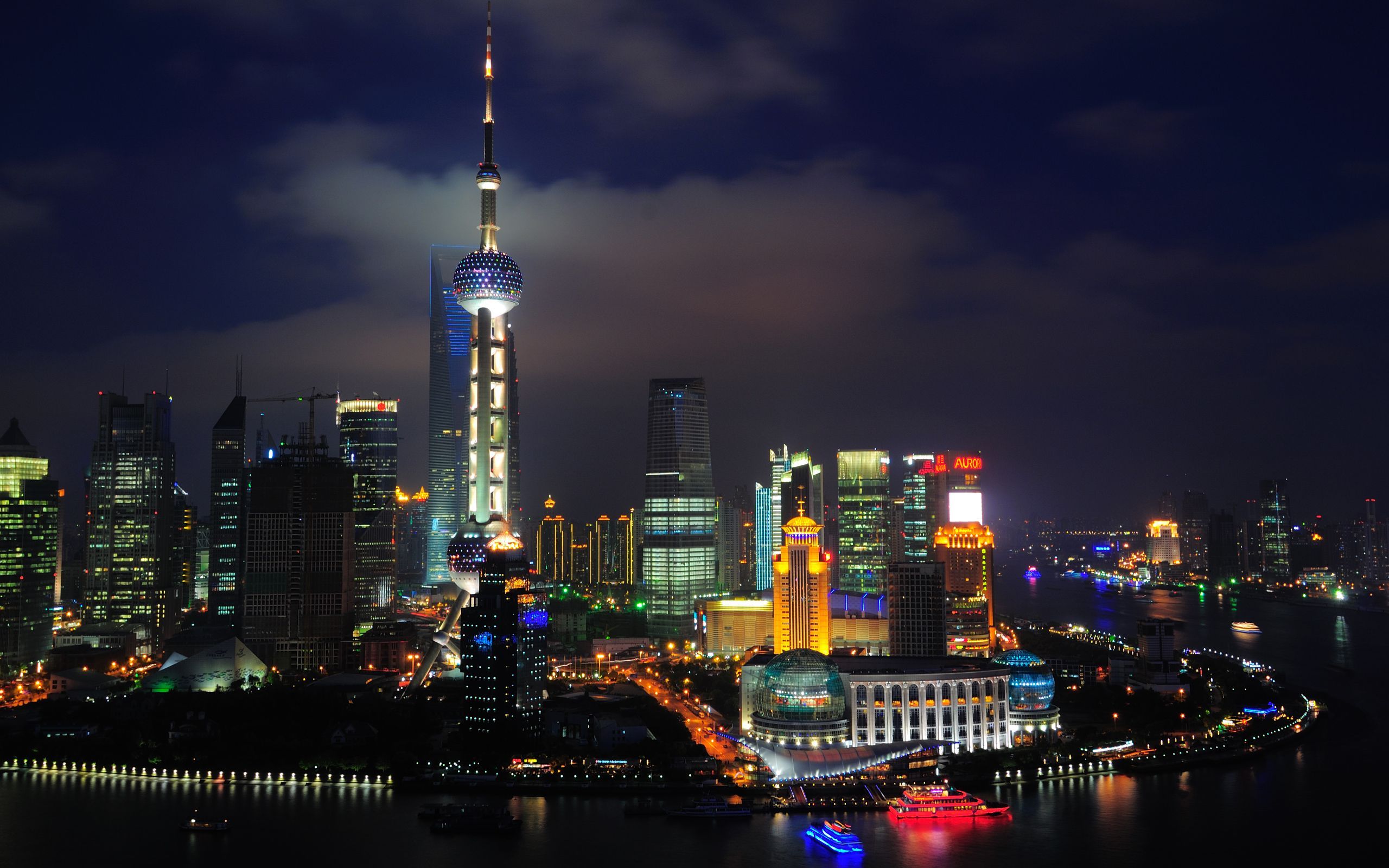
Is a City something physical? To some extent, yes.
But it goes beyond physicality.
Cities are geographical locations, structured concretely (streets, skyscrapers, campus etc.),
but they are also immaterial, in the sense that what they induce, what they engender, is not tangible, yet there.
Psychosis, mental illness, loneliness, deindividuation, sonder etc.
"One day, and probably soon, we need some recognition of what above all is lacking in our big cities:
quiet and wide, expansive places for reflection.
Places with long, high-ceilinged cloisters for bad or all-too-sunny weather
where no shouting ornoise of carriages can reach …"
~Friedrich Nietzsche, The Gay Science
Nietzsche criticizes the city’s loudness, its constant stimulation,
no place for reflection or any form of deeper being.
We affirm, and observe it in the status quo.
The need for stimulus in today’s society hasn’t changed variables, it just exponentiated.
Phones, advertisement, neon-colors, all symptomatic for constant diversion,
fleeing from the deficiency in real human connection, real fulfillment, and their lack of dreams.
Synthesis: To conclude: What is a City?
We can say that cities are material and immaterial entities,
capturing individuals, dehumanizing and flattening civilizations in an almost parasitic behavior,
whilst constantly keeping them stimulated and therefore disrupting real reflection.
Humans As Code — Urbanisation’s Psychological Impact
2.1 The Problem With Having No Problems
Cities are convergence points for
mental illness, why? Food, consumerism,
social relationships, everything so near in sight.
This hedonistic consumption however does not lead to
fullfilment and a state of mental satifscation but to weariness,
a mode of excessive devouring that results in nothing
more than apathy and fatigue.
This at first glance contradictory behavior is often
referred to as the "Paradox Of Hedonism".
(for more read: paradox of hedonism )
2.2 Loneliness, Depression, Suicide
Picking up the topic mentioned above, social relations.
The sociologist Émile Durkheim coherently argues that
suicide can be analzyed in relation to social integration.
He then backed his intuitive thought with empirical evidence,
showing that suicide rates surged wherever industrialization/urbanization took place.
Othere determinants include religiosity, family and economic mileus.
Although Émile Durkheim's work is often critized for ignoring
individual factos such as genetics et cetera, it still gives
important insights on the importance of society for the individual.
Applying Durkheim's assumption to the contemporal situation, parralels show.
Loneliness and Depression are at an all time high and mostly emanate from
cities with a large quantity of extropy (s.a.).
This indicates that social relations are fractured, destroyed or synthesized.
The exact cause is of course indeterminable but it can be speculated that it
has to do with capital-relations (capital seeks to extract surplus and elimante
friction such as morality, state, family etc. → leads to fragmentation of the socius,
since it no longer is based on elements incommensurable to capital
→ social relations destroyed in the name of capital → loneliess, depression, suicide).
2.3 Alienation and Derealisation
Marx analyzes economic alienation from the means of production through division of labour.
Kafka speaks of alienation from labyrinthine bureacratic formations making the individual
feel impotent and helpless. Fullfilling this trias we shall speak of social alienation,
or more precisely corporeal alienation. In megapolitan cities people appear as 1's and 0's, a flux, always moving never stopping. Social relations and more importantly the own body becomes incongurently divergent from ones own mental faculty. The language one speaks doesnt feel like his own, the gestures and other paralinguistic expressions become signifiers for current social codes yet obsolesce themselves integrally because they arent ones own. The contemporary british philosopher articulates the following posthumanist prognosis: "No human makes it out of the near future."
~Nick Land, Fanged Noumena Collected Writings
We wont take this citation in the dystopian and literal sense, but let room for interpretation. No human makes it out the near
future because megalomaniac entities called cities dissolve our anthropomorphic behavior. Humans as Code. No room for thinking, no room for social relations, its time to succumb. Alienation happens when territories (in the abstract sense for anything that draws a clear distinction of the outside and inside, f.e. family, state, etc.) are dissolved in a process of deterritoralization , breaking free from structure and order. Now, without this clear inside outside distinction, reality seems obscured and hetergenous, entropic and chaotic.
Conclusion : Alienation appears when there is nothing to identify with, hotspot: city.
Derealisation is defined as an alteration in the perception of the external world. We spoke of the process of deterritoralization, the movement away from a territory, often breaking free from rigid formations and structures, we will define this movement taken to the extreme as "Schizophrenia", not in the clinical sense of course. Schizophrenia at the start is impersonal, it exists within capital relations and societal developments (f.e. industral revolution dissolved the agrarian territory etc.) But when megapolitan late stage capitalism schizophrenizes anything, it does not bother inscribing itself onto the bodies of humans. Schizophrenia now, is not reterritoralized , it instead flows free unhindered. This leads to derealization, because schizophrenized people, lets call them schizophrenics, are unable to accept any given structure, norm, or social code. The real requires dichotomies such as true/false, right/wrong, family/not-family, yet the schizophrenic does not restrain himself from flowing freely and thus ignores any dichotomy, ergo derealization.
Reclaimer: Schizophrenia, in this definition, is not inherently negative or positive, but extreme deterritoralization via drugs, eroticism et cetera often leads to mental/psychiatric dysfunctions, what we then come to know as the clinical schizophrenic.
Mental-Illness and Urbanisation
The Technosphere — Daring An Ecological Prognosis
We are entering a new realm. A new timeline and, more significantly, a new modus of time. The biosphere has been repudiated out of the anthropomorphic kingdom and is now not regarded as familiar, but peculiar and extraneous. The ecological and concrete reality has been obscured and now, for the techno sapiens, looks almost artificial. Technology has become the real; it's all we know. The ancestral relation with nature is concealed, as its unveiling or re-veiling would position the human as one amongst the fauna kingdom. Human history is the process of compensating the misery of consciousness and embarrassment with technology or culture. The techno sapiens take this to the extreme: with an almost feeling of hatred, they sweep through the biosphere in a violent surge. Agrarisation, urbanisation, infrastructure is what they forcefully assert. Domestication of the animal to prove one’s superiority. Infrastructure is accelerating rapidly; we control geological and evolutionary development through genetic engineering and industrialism.
The prognosis goes like this: the next generations will be characterized by the negation of nature and the mystification of the ecological world. What does that mean? Nature will appear as something diametrically opposed to the anthroposphere — as something that is seen as barbarian and primitive on the one hand, but, on the other hand, as something alien, almost mystic, as it does not fit our standardized classifications of rationality and salvation through technology.
Enduring A Dystopia — A Subversive Way Of Living
The question on how to live in one of these ubiquitous immaterial formations, known as cities, is of increasing relevance. At first glance, two ends crystallize:
1. Fatalism: Accepting the city's parasitic behavior and letting it integrally consume you, resulting in you transitioning into a commoditized neurotic unit, or
2. Rebellion: leading to the inscription of non-psychiatric schizophrenia onto the contours of subjectivity, transferring you into a state of flows and intensities, with the danger of backfiring into complete derealization and loss of identity.
We will negate these endings and try to find middle ground. The solution being subversion. The imperative goes the following:
"Deterritorialize yourself without schizophrenization"
Why is deterritorialization important? It is of great significance because it emancipates the subject from rigid oppressive structures such as the concept of gender, capital, and ideology. Especially in cities, this trait is necessary to survive as it helps constituting a general awareness of the influences forces have on your psyche and perception of the world.
F.e. consumption-oriented advertisement or the mass medial apparatus. Someone will fall for such things way easier if he hasn’t deconstructed and reflected the hidden intentions behind such industries.
Why not schizophrenization? Because an entire fragmentation of the self and therefore the dissolution of identity leads to the impossibility of reflecting on the environment. You'd be vulnerable to any surrounding as the prerequisite of schizophrenia is the ineptness of any rigid structure — therefore also the ability of the mind to choose, order, sort, prefer.
To summarize: For one to strive in megapolitan habitats, he has to adapt himself properly via moderate deterritorialization.